- Microsoft 365 and Google Workspace charge for every user, every month; a self-hosted Nextcloud from PHOENIX costs one flat monthly price.
- With Nextcloud you know where your files are stored and who runs the server — and you are never locked into one vendor's cloud.
- Pair Nextcloud with business email hosting on your own domain for a complete, self-hosted office platform.
- The bigger your team, the more a flat-priced, self-hosted platform saves.
Comparing Nextcloud vs Microsoft 365 — and Google Workspace — usually starts with one question: how much will it cost us each month? Microsoft 365 and Google Workspace charge for every user, every month, in US dollars, and store your files in their own global clouds. A self-hosted Nextcloud takes a different approach: one platform for files, calendars, chat and video calls, running on a server you choose, at a predictable price.
This guide compares the three using official list prices as of October 2026 and a worked example for teams of 10 and 25 people — and explains why a self-hosted collaboration platform makes sense for Namibian businesses.
Subscription Suites vs a Self-Hosted Platform
Microsoft 365 bundles Exchange email, Teams, OneDrive storage and the Office apps into a per-user subscription that runs in Microsoft's cloud.
Google Workspace offers Gmail, Meet, Drive and the browser-based Docs, Sheets and Slides — again billed per user and stored in Google's cloud.
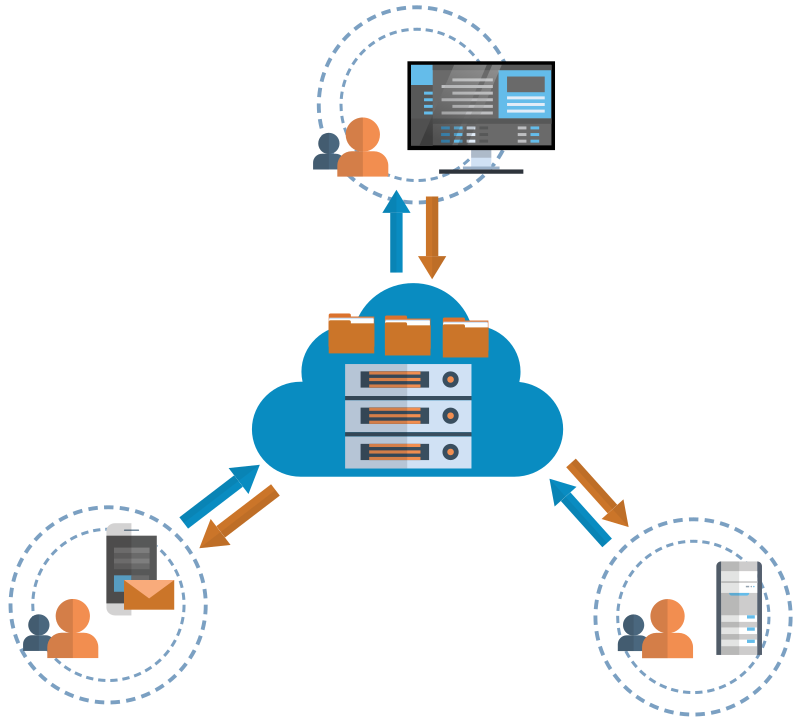
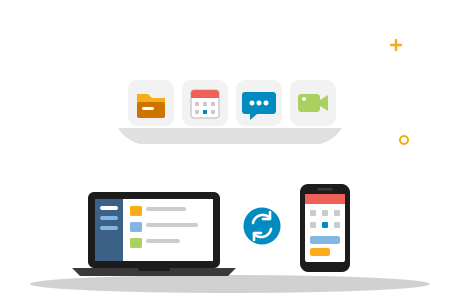
Nextcloud is open-source collaboration software: file sharing and sync, calendars, contacts, chat and video calls, plus a large library of add-on apps. Instead of renting space in a global cloud, you run it on a server you choose — your own, or one managed for you by a hosting provider such as PHOENIX. Your platform, your rules.
Microsoft 365 Price in Namibia Compared With Google Workspace and Nextcloud
Whether you buy Microsoft 365 or Google Workspace in Namibia, the list prices are published in US dollars per user per month. Microsoft raised the price of its Business Basic and Business Standard plans on 1 July 2026. As of October 2026, the official list prices are:
| Plan | Price per user per month | Billing |
|---|---|---|
| Microsoft 365 Business Basic | US$7.00 | Annual commitment |
| Microsoft 365 Business Standard | US$14.00 | Annual commitment |
| Microsoft 365 Business Premium | US$22.00 | Annual commitment |
| Google Workspace Business Starter | US$8.40 | Flexible (monthly) plan |
| Google Workspace Business Standard | US$16.80 | Flexible (monthly) plan |
| Nextcloud hosted by PHOENIX | N$ 1 650 flat, unlimited users | Monthly, excl. VAT, 100 GB storage |
Google's annual plan is cheaper than its flexible plan — Business Starter, for example, costs US$84 per user per year on an annual commitment. Microsoft notes that its prices may vary by country and currency.
Worked example: 10 and 25 users
Converted at about N$16.43 to the US dollar (the reference rate on 20 October 2026) and before VAT or other taxes, the approximate monthly bill looks like this:
| Option (approx. per month) | 10 users | 25 users |
|---|---|---|
| Microsoft 365 Business Basic | N$ 1 150 | N$ 2 875 |
| Microsoft 365 Business Standard | N$ 2 300 | N$ 5 750 |
| Google Workspace Business Starter (flexible) | N$ 1 380 | N$ 3 450 |
| Google Workspace Business Standard (flexible) | N$ 2 760 | N$ 6 900 |
| Nextcloud hosted by PHOENIX | N$ 1 650 | N$ 1 650 |
The pattern is clear: per-user subscriptions grow with every person you hire, while a flat-priced Nextcloud costs the same for 10 or 100 users. For a team of 25, the subscription plans in this example cost roughly N$ 2 875 to N$ 6 900 a month; the self-hosted platform stays at N$ 1 650.
To compare fairly, add business email hosting and any extra storage you need — the Nextcloud package includes 100 GB in total, while the suites include more storage per user. Even then, a flat price means your costs no longer climb every time you hire.
Features Compared: Files, Email, Meetings and Documents
| Microsoft 365 | Google Workspace | Nextcloud | |
|---|---|---|---|
| Business email | Included (Exchange) | Included (Gmail) | Paired with your own email hosting |
| File storage | 1 TB OneDrive per user | 30 GB (Starter) or 2 TB (Standard) pooled per user | Depends on the plan — 100 GB in total with PHOENIX |
| Chat and meetings | Microsoft Teams | Google Chat and Meet | Nextcloud Talk |
| Documents | Office web and mobile apps; desktop apps from Business Standard | Docs, Sheets and Slides in the browser | Online editing through apps such as Nextcloud Office |
| Calendar and contacts | Outlook | Google Calendar and Contacts | Nextcloud Calendar and Contacts |
| Where it runs | Microsoft's cloud | Google's cloud | A server you or your provider choose |
| Pricing | Per user, in US dollars | Per user, in US dollars | Flat, unlimited users |
For the daily work of most small and medium-sized businesses — sharing files securely, planning together and meeting online — Nextcloud covers the essentials. Add-on apps extend it further, from online document editing to forms, polls and project boards. If your team edits many Office documents, test your typical files in the office app your plan includes before you switch.
Data Control: The Biggest Reason to Self-Host
With Microsoft 365 and Google Workspace, your files and email are stored in the provider's global data centres under their standard terms. You cannot choose the individual server or speak to the people who run it, and your costs and features change whenever the vendor changes its price list.
A self-hosted Nextcloud is different. Because it is open-source software, it runs on a server you own or on one managed by a provider you can talk to directly. You can ask exactly where the server and its backups are located, who has administrative access and how long data is kept — and because the software and formats are open, you are never locked into one vendor.
That control matters more as Namibia prepares its first dedicated data protection law. The planned Bill also covers how personal data is hosted, stored and transferred across borders; we explain where it stands in our guide to Namibia's Data Protection Bill.
Business Email on Your Own Terms
Nextcloud is a collaboration platform, not an email server. Its Mail app is an email client that connects to your mailbox, so you combine Nextcloud with email hosting for addresses such as info@yourbusiness.com.na.
That keeps email under your control as well. With business email hosting on your own domain, your mailboxes sit with a provider you know, and you can change your file platform or your email provider independently. If you are setting up company addresses for the first time, read how to create a professional email address with your own domain.
Moving From Microsoft 365 or Google Workspace to Nextcloud
- Start with an inventory. List the mailboxes, shared folders, calendars and meeting habits your team relies on today.
- Export your data. Download files from OneDrive or Google Drive and export calendars and contacts in standard formats.
- Move files in stages. Migrate one department or project folder at a time and check sharing permissions as you go.
- Move email separately. Changing email provider mainly comes down to migrating mailboxes and updating your domain's DNS records — it does not have to happen on the same day as the file move.
- Train people early. A short session on the desktop and phone sync apps prevents most support questions. PHOENIX's Nextcloud package includes one hour of training.
Why a Self-Hosted Nextcloud Makes Sense
For Namibian businesses, a self-hosted Nextcloud brings three lasting advantages:
- A flat, predictable cost — priced in Namibian dollars, with no per-user fees, so your bill stays the same as your team grows.
- Control over your data — you know where your files are stored, who can access the server and how long data is kept, which will matter more under Namibia's coming data protection law.
- No lock-in — open-source software and standard formats mean you can change provider or bring the platform in-house whenever you choose.
Combine it with business email hosting on your own domain and you have a complete office platform that you control, at a cost that does not rise with every new colleague.